Customer Experience

Emmie Houang
Marketing Communications Specialist
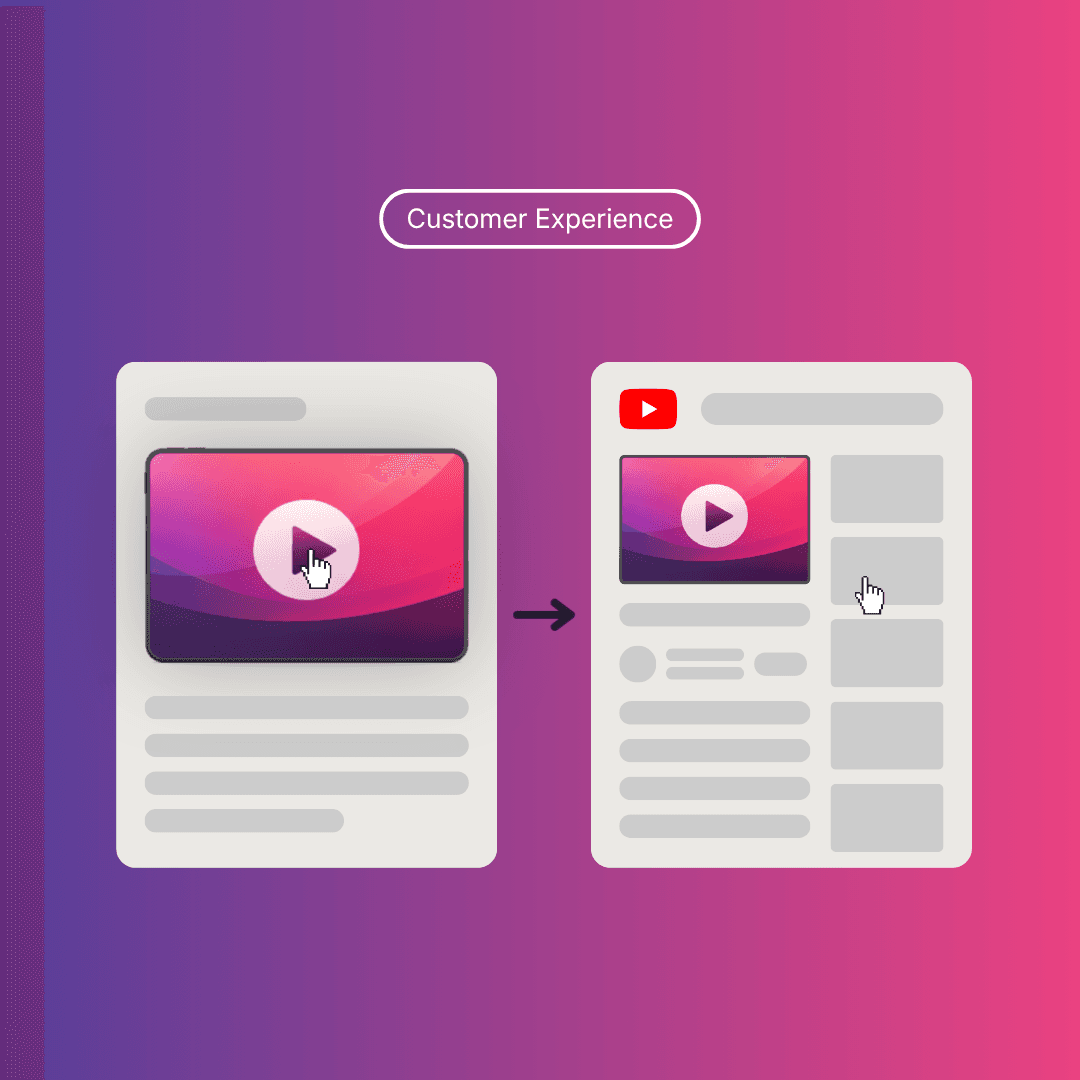
Imagine this: you’ve spent hours crafting the perfect email campaign. The subject line is sharp, your offer is irresistible, and in the center is a video thumbnail with a tempting play button. A subscriber opens it, sees the button and clicks out to YouTube. Within seconds, YouTube recommends similar videos from competitors and ads interrupt the viewing experience. Competing brands, creators, and distractions suddenly surround the customer you worked hard to reach and engage with.
Linking out to YouTube disrupts your customer journey because it exports your high-intent traffic to a platform designed to keep users there. With an average session duration lasting over 25 minutes, a subscriber clicking your video links in email is highly likely to stay on YouTube instead of returning to convert.
“So what if the video never had to leave the email at all?”
Modern technology, like Playable, is changing how brands think about video engagement. Instead of forcing subscribers to leave the inbox, marketers can now deliver inline autoplay video in email with sound. Video plays directly inside the email, the moment it’s opened, with no external links required, keeping the attention, emotion, and conversion momentum intact from open to action.
Here's what's really happening when subscribers click out to YouTube, and how keeping video inside your email changes everything.
Why Marketers Link to YouTube
Historically, email was designed as a delivery medium, its job was to get people somewhere else—a website, landing page, or product page. The email itself was the vehicle for text, images, and URLs. When the rise of short-form video exploded across social media, video became a marketing necessity. Given how central video had become for storytelling, product launches, and brand building, adding video to email was the next natural step, but emails weren’t built for large video files.
Most email clients like Outlook and Gmail, couldn’t render embedded video reliably with inconsistent playback quality, deliverability issues and slow load times. So marketers did what made sense at the time: they took a screenshot of the video, added a play button overlay, and linked to a video on YouTube. The thumbnail-with-play-button became the industry standard quickly as it was practical, free, and it worked to make people click. YouTube also became the main video delivery platform as it offered free hosting, built-in analytics, and reach.
This practice became embedded in email marketing culture where most email platforms default to link-out behavior as templates are built for it and best practice guides recommend it. Teams assume subscribers will click out, watch the video to drive interest, and come back to the email or landing page to convert. This worked for a while, but data shows they often don’t come back.
The Real Problem: What Happens After They Click
When you rely on outbound video links in email, you push your subscriber out of your brand experience and into a platform you can’t control, breaking the user’s customer journey. Every external redirect introduces friction, distraction, and conversion leakage into the experience.
The YouTube Algorithm
YouTube is not a neutral video player, it’s a retention machine. Its recommendation engine is built to keep viewers watching as long as possible for its advertisers. It doesn’t help to build your marketing or sales funnels.
According to industry data, 70% of total YouTube watch time is driven by its recommendation algorithm. The moment your subscriber lands on YouTube, the platform’s primary goal is to keep them scrolling, watching, and clicking through to the next video. That means the customer who clicked because of your brand is now being actively redirected toward unrelated content. Traffic data shows that the average session duration on YouTube is 25 minutes and 11 seconds.
Think about what this means for your email campaign. If your brand video is one to two minutes long, but your subscriber’s average YouTube session lasts over 25 minutes, they are spending 90% of their time on unrelated content. This includes competitor ads, autoplay recommendations, pre-roll ads, and suggested content sidebars, all competing for the user’s attention. Your email started the customer journey but YouTube ended it, with a low chance of your customer returning to convert.
The Funnel Drop-Off
When a subscriber clicks an outbound video link in your email, they don’t just leave your email, they leave your entire brand context, environment, and ecosystem. The emotional momentum created by your copy, visuals, and CTA gets interrupted by an entirely different interface.
One of the biggest weaknesses of linking to YouTube (or any video player) from email is that the return rates are extremely low. Most subscribers do not watch a YouTube video and then navigate back to the original email to continue the journey. And the moment they land on a third-party platform, your tracking goes dark and you lose all visibility into what they do next, and whether they ever come back.
The Brand Experience
An effective email customer journey relies on emotional momentum. Your layout, copy, tone, imagery, and value proposition work together to create a flow that guides the reader toward a specific action.
The moment your subscriber lands on YouTube, they’re inside someone else’s platform with a different design, unrelated content, and a competitor’s ad playing before your video even starts. Everything your email worked hard to build: the curiosity, excitement, and momentum toward conversions, gets interrupted when they are being redirected. Once that focus is broken, it rarely comes back.
“Every click on an external platform is a leak point in the conversion funnel.”
What the Customer Journey Should Actually Look Like
An optimized customer experience shouldn't have multiple breaks—it should be one seamless journey from the moment they open your email to the moment they convert.
Current email journey: Subscriber opens email → Views and clicks on video thumbnail → Links to YouTube platform → Abandons brand funnel
Ideal email journey: Subscriber opens email → Video plays natively → Value communicated → User clicks on branded CTA → Conversion
The Solution: Inline Autoplay Video in Email with Sound
Playable’s inline autoplay video in email with sound changes this entirely. Rather than a thumbnail linking to YouTube, the video lives natively inside the email and plays the moment it's opened—automatically, with sound, and with zero friction. There are no redirects, platform switching, or competitor ads interrupting the moment. Just your video, your message, and your subscriber all in one place.
The approach repairs the current broken email journey with:
Total Ecosystem Control: The viewer never leaves your message, keeping your brand front and center, from open to conversion.
Zero Distractions and Friction: No competitor recommendations, content advertisements, or extra action needed when watching the video content.
Immediate Conversion Paths: High-intent CTA is visible above or below the video, meaning the next logical step is obvious.
The Data Shift
When brands switch from outbound video links to inline autoplay video in email, the performance numbers change drastically. Playable’s platform data and benchmarks show:
Inline video campaigns can generate up to 200% higher click-through rates.
Inline autoplay video drives up to 6x more user interaction and engagement compared to traditional email formats.
With no distractions like recommendations and ads to pull viewers elsewhere, brands using inline video email reach a 95% viewer retention rate.
What About Email Client Support?
Email client compatibility is the question every email marketer asks first, and understandably so. Inconsistent support across email clients was the original reason the link-out model exists. Playable’s infrastructure is built specifically to solve this, ensuring your video reaches subscribers at the highest quality their client can support.
Playable uses progressive fallbacks that adapt based on the inbox support:
Inline autoplay video in email with sound where supported like Apple Mail and Thunderbird.
Animated GIF previews and a lift-to-browser experience for clients with low video support like Gmail and Microsoft Outlook.
Static thumbnails as fallback layers for other email clients like Samsung Email and older versions of Microsoft Outlook.
Real-World Results: The Aeroméxico Case Study
Aeroméxico, Mexico’s flagship airline, integrated Playable’s inline autoplay video into its Hot Sale email marketing campaign. Rather than linking subscribers out to video content on an external platform, the airline delivered high-quality, auto-play video directly within the email.
The video email delivered:
25% lift in conversions compared to static email.
12% year-on-year increase in conversion rates.
8% increase in email-driven revenue.
Between March and June 2025, Aeroméxico delivered over 30 million video views, contributing approximately MXN$112 million in revenue during that period. Mobile devices drove 60% of those views, demonstrating that inline autoplay video thrives in environments where linking out to an external video player poses the greatest risk.
Read more about the case study here.
Conclusion: Stop Sending Your Audience Away
Every outbound click you place over a video thumbnail is prone to friction and drop-off in a subscriber’s email journey. It invites them to step away from your brand ecosystem and enter a new platform to capture their attention and keep them from coming back into your environment.
With the average YouTube session lasting over 25 minutes and the next video is chosen by the algorithm, rather than the viewer, linking out starts being a liability. Every time you link to YouTube from email, you’re voluntarily handing your most engaged subscribers to a platform designed to keep them there.
Inline autoplay video in email with sound changes that email experience entirely. The video plays in the inbox, the journey becomes uninterrupted, and the data shows that video email converts at higher rates. Implementing video into your emails will help create a frictionless email journey to drive revenue and conversions.
Stop sending your audience to YouTube and start keeping your conversions in email. Get started with Playable’s inline autoplay video in email with sound to explore how you can transform your email campaigns into frictionless customer experiences.