Digital Marketing

Emmie Houang
Marketing Communications Specialist
Livestreaming originated in the world of eSports, with gamers broadcasting on Twitch and YouTube to highly engaged online communities. What began as niche entertainment quickly evolved into a mainstream communication channel. Today, livestreaming powers product launches, corporate announcements, training sessions, and global webinars.
Since COVID-19 accelerated digital transformation, virtual events and webinars have become core pillars of modern marketing strategies. What was once a temporary substitute for in-person gatherings is now a permanent, high-performing channel.
From SaaS and e-commerce to airlines, financial services, retail, and B2B enterprises, businesses of every size are investing in livestreaming and virtual events to increase engagement, generate leads, and build stronger brand awareness. The cost of hosting virtual events is significantly lower than physical live events, yet the marketing effort required to promote them remains just as important.
In 2026, virtual events don’t exist in isolation. They sit within a broader marketing ecosystem powered by video, automation, personalization, and cross-channel delivery. The brands seeing the strongest results are those connecting livestreams and webinars to email, in-app messaging, SMS, push notifications, and on-demand replay strategies, turning single broadcasts into multi-phase engagement campaigns.
After years of disruption and recalibration, events have entered a more disciplined era. Livestreaming, online events, and webinars are expected to influence pipeline, accelerate deals, deepen relationships, and deliver measurable ROI. In 2026, virtual event marketing is no longer experiential, it drives strategic growth.
The Evolution of Virtual Event Marketing
Virtual events have revolutionized how organizations connect with their audiences. Advances in streaming technology, marketing automation, AI, and cross-channel video delivery have transformed livestreaming and online events from a broadcast tool into a highly interactive, data-driven growth engine. Today’s virtual events are:
Inclusive and globally accessible
Cost-effective compared to physical events
Powerful lead drivers and sales generators
Effective at connecting brands with audiences and speakers
Proven tools for brand awareness campaigns
The date clearly reinforces this shift in audience behavior and event strategy. In 2026, 53% of attendees plan to participate in more webinars, which directly correlates to 61% of organizers reporting year-over-year growth in webinar attendance. Engagement levels are equally strong, with virtual session completion averaging 71% of total session length and viewers spending approximately 46 minutes per session on average. These metrics demonstrate that webinars and virtual events are no longer fallback alternatives to in-person events. Instead they have evolved into reliable channels for learning, networking, and revenue-generating channels that are fully integrated into the broader marketing ecosystem.
The Livestreaming Market in 2026
The global livestreaming industry is projected to reach $534 billion by 2030, reinforcing its dominance as a content consumption format. The rise of video as the primary communication medium, combined with pandemic-driven behavior changes, has solidified livestreaming as a mainstream channel.
Platforms like YouTube, Facebook, Twitch, TikTok, and Instagram continue to expand livestreaming capabilities, while the social platforms remain central hubs for live video engagement. The popularity of eSports and gaming has also accelerated livestreaming adoption across demographics. Younger audiences, particularly Millennials and Gen Z, increasingly prefer livestream and on-demand video over traditional cable television. For marketers, this means livestreaming is no longer optional, it’s foundational to digital engagement strategies.
What’s the Difference: Livestreaming vs. Webinars vs. Virtual Events
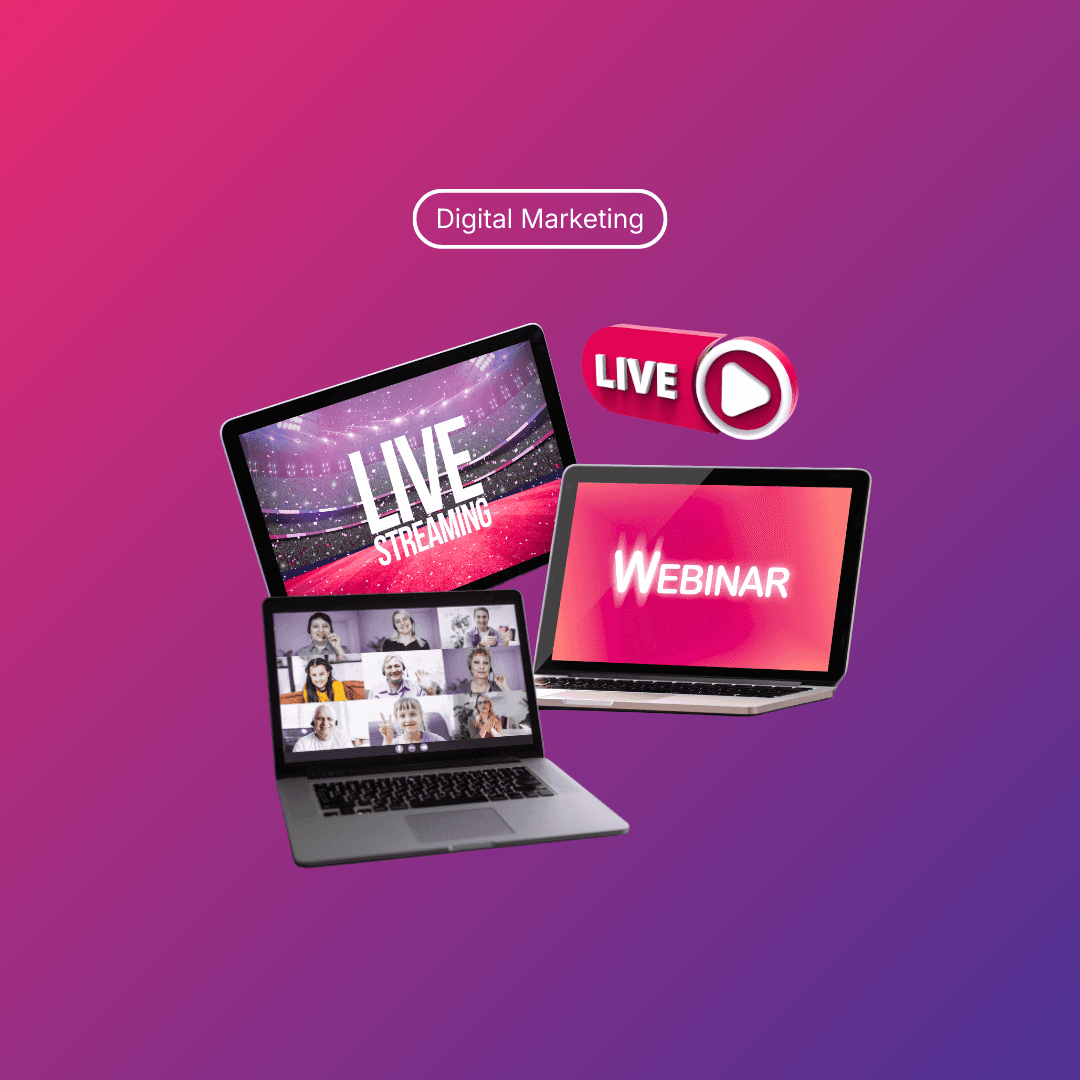
Understanding the distinction between livestreaming, webinars, and online events is essential for building an effective virtual event marketing strategy.
Livestreaming
Livestreaming is the act of broadcasting real-time video content online via platforms like Twitch, YouTube Live, Instagram, Facebook, and TikTok. Viewers can watch, comment, react, and interact instantly. Brands can use livestreaming for product launches, behind-the-scenes content, influencer collaborations, live e-commerce, and real-time announcements. Livestreaming prioritizes immediacy and interactions with the online community.
Webinars
Webinars are focused online seminars designed to educate or inform a targeted audience. They typically include video, slides, live Q&A, polls, and chat features. Webinars are ideal for training sessions, lead generation, thought leadership, product demonstrations, and customer onboarding. They are structured, goal-driven, and often integrated into marketing automation workflows and ecosystems.
Online or Virtual Events
Virtual events are comprehensive digital experiences that replicate large-scale physical events such as conferences, trade shows, expos, and summits. They include multiple sessions, networking rooms, sponsor booths, and on-demand content libraries. Virtual events combine livestreaming and webinars into a unified, multi-tiered experience.
In 2026, successful virtual event marketing strategies blend livestreaming, webinars, and virtual events; or position one of these formats as a central anchor within a fully integrated marketing ecosystem.
Top Virtual Event Marketing Trends in 2026
Trend #1: Video-First, Cross-Channel Promotion
In 2026, virtual event marketing begins long before the livestream, webinar, or online event starts. Videos are used across email marketing, landing pages, SMS and WhatsApp, in-app messaging, push notifications, and social platforms. Short teaser videos build anticipation for digital events and webinars. Speaker clips, countdown videos, and behind-the-scenes previews increase registration rates and engagement. Cross-channel delivery ensures audiences experience consistent messaging across online touchpoints.
Brands can use Playable’s technology to promote a Twitch livestream through video email that dynamically updates the current livestream. This allows audiences who have registered for the livestream or online event to preview it before they join. Following the end of the digital event, Playable can swap the video to transition from live promotion to replay video messaging, encouraging continued engagement through on-demand viewing. This seamless integration between livestreaming and email marketing strengthens campaign performance, improves click-through rates, and increases event anticipation and participation before, during, and after the livestream.
Trend #2: Ultra-HD, Immersive, and Adaptive Livestreaming
Audience expectations are rising, especially in 2026, where viewers expect 4K, 8K, and immersive streaming experiences. Attendees no longer tolerate poor video resolution, lag or buffering, especially when attending professional webinars or large-scale virtual events. Adaptive bitrate streaming technology ensures viewers have reduced buffering and loading times, and receive seamless playback regardless of device or network speed. Whether someone is watching a webinar on mobile during a commute or attending a multi-session virtual event from a desktop, the experience must remain smooth and uninterrupted.
As platforms continue to evolve, there is an increase in experimentation with augmented reality (AR), virtual reality (VR), and interactive overlays, enhancing live and virtual events to create more immersive and interactive environments. For enterprise brands, immersive virtual events are creating experiences that rival physical conferences in production value and audience participation. Production and streaming quality directly shape brand perception. A well-executed livestream or online event conveys professionalism, credibility, and innovation, whereas a poorly executed one can undermine trust and reduce audience engagement.
Trend #3: Livestream E-Commerce
Livestreaming is no longer just a communication channel, it is now a sales channel in 2026. Livestream e-commerce is one of the most powerful virtual event marketing tools that combine livestreaming and e-commerce. Instead of browsing through static product pages, viewers can join interactive livestream events, ask questions in real time, and receive immediate responses from hosts or influencers. This is especially effective for brands in retail, fashion, beauty, consumer industries. Platforms like Facebook, YouTube, TikTok, Instagram, and Amazon Live are blending entertainment with instant purchasing.
Livestream e-commerce is transforming into revenue-driving machines, with conversion rates up to 10 times higher than traditional e-commerce and nearly 60% of viewers make purchases during or after a livestream or online event. For retail and direct-to-consumer brands, this makes live shopping a cornerstone of virtual event marketing strategy in 2026. Even B2B organizations are leveraging livestream product launches and demonstration days to accelerate pipeline generation. With platforms investing heavily in live commerce infrastructure, marketing strategies must evolve to integrate transactional elements seamlessly, narrowing the gap between engagement and conversion using livestreaming and online events.
Trend #4: Short-Form Content Extends Event Lifecycles
In 2026, no livestream or webinar ends when the broadcast stops. Short-form content has redefined how audiences behave, discover, and consume video content online. Popularized by TikTok, Instagram Reels, and YouTube Shorts, brands must prioritize quick, engaging clips that capture attention instantly.
Smart marketers are repurposing long-form content from livestreaming, webinars, and digital events into high-impact short-form video content. These include highlight clips, speaker soundbites, key insights, memorable quotes, and behind-the-scenes moments which become valuable video assets. Playable can help to repurpose and optimize video event content for other marketing communication channels including email, in-app messaging, SMS/MMS, WhatsApp, and push notifications.
Repurposing virtual event content increases audience reach and markets, drives new registrations, and extends the lifespan of online events. In fact, 82% of organizers create video-on-demand content from events, and 53% create gated videos to generate leads, which requires viewers to provide their information to gain access. Short-form content fuels ongoing engagement, enhances discoverability, and supports marketing funnels, allowing brands to treat livestreaming and online events as long-term content hubs rather than single-use broadcasts.By bridging the gap between livestreaming and on-demand consumption, these assets drive social engagement, reinforce thought leadership, and capture new prospects after the event ends.
Trends #5: AI Revolutionizes Virtual Event Marketing
Artificial intelligence is transforming livestreaming, webinars, and virtual events in multiple ways. AI-powered personalization engines analyze attendee behavior to recommend relevant sessions, suggest networking opportunities, and curate personalized agendas. Instead of navigating overwhelming event schedules, participants can experience tailored journeys aligned with their interests and goals. Behind the scenes, AI can enhance livestreaming and broadcasting quality by automatically adjusting resolution, reducing noise, generating real-time subtitles, and optimizing compression for devices and bandwidth. This ensures consistent online experiences across global audiences.
AI-driven analytics can also provide deeper insights into engagement patterns, content performance, and revenue attribution. Marketers can track how webinars influence pipeline, how virtual events impact deal acceleration, and which sessions generate the most qualified leads. Integration with marketing automation platforms further amplifies this impact. Automated follow-ups, personalized email sequences, and intelligent lead scoring ensure that virtual events feed directly into demand and lead generation strategies.
Trend #6: Livestreaming and Virtual Events as a Core Growth Strategy
Livestreaming, webinars, and virtual events are no longer treated as isolated campaigns. They are embedded into broader marketing ecosystems and aligned with revenue goals. Organizations now operate recurring webinar programs instead of one-off sessions. Virtual event marketing calendars align with product launches, quarterly campaigns, and sales cycles. Hybrid strategies blend physical events with livestream or digital components to expand reach and capture data from both in-person and remote audiences.
Executives increasingly view virtual events as pipeline accelerators rather than solely brand awareness plays. They influence customer education, community building, and long-term retention strategies. As expectations rise and competition intensifies, brands that treat livestreaming and online events as a strategic growth channel will dominate in 2026.
Conclusion: The Future of Livestreaming, Webinars, and Virtual Events
The evolution of virtual event marketing reflects a broader shift in digital engagement: video dominates, interactivity is expected, personalization is mandatory, and data drives every decision. Livestreaming has moved from niche entertainment to mainstream marketing infrastructure, webinars have become consistent community channels, and virtual events now serve as scalable engines for global growth.
Brands leveraging solutions such as PlayableLive, they can integrate live, replay, and repurposed video seamlessly across email and other marketing channels. This transforms every event into a sustained engagement engine that strengthens campaign performance, improves click-through rates, and increases participation before, during, and after the livestream.
As we move further into 2026, the brands that succeed will invest in high-quality livestreaming technology, leverage AI for personalization and analytics, extend virtual events through short-form content, integrate webinars into unified marketing strategies, and treat virtual event marketing as a core business strategy. The future of online events isn’t just physical or digital; it’s integrated, intelligent, and interactive in 2026.